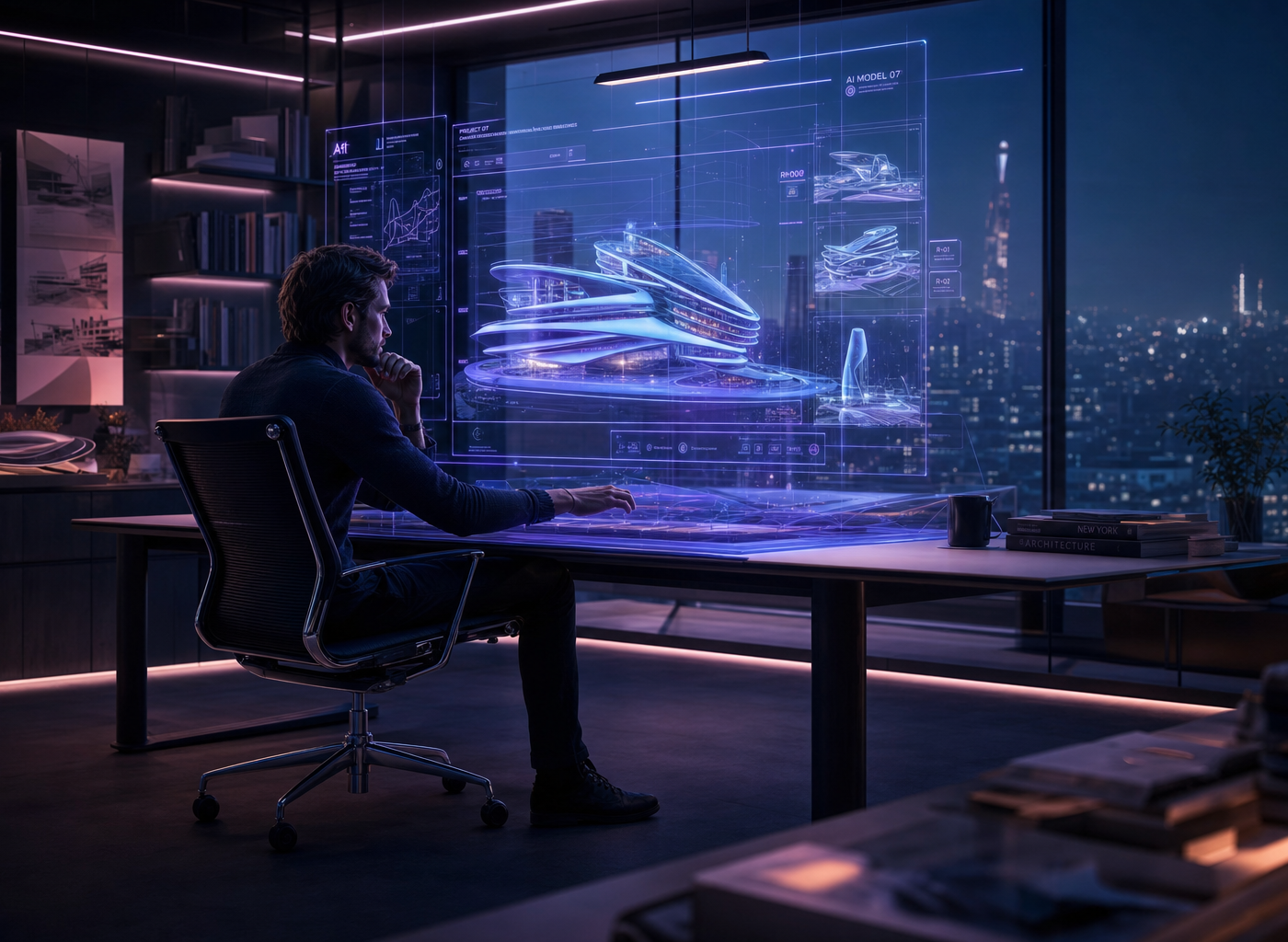
Why Designers Are Ditching Midjourney for Private AI Studios
Let's be honest. For a minute there, Midjourney was magic. Pure, unadulterated magic. We, as designers, were absolutely captivated. The sheer speed from concept to visual, the limitless iterations before our eyes—it felt like we’d finally cracked the code to infinite creative ideation. And for a good while, it was that good. But times change, and so do professional needs. We’re deep into 2025 now, and the landscape is starkly different. More and more, I’m seeing my peers, veteran designers, and cutting-edge studios alike, making a decisive move. They’re seeking a Midjourney alternative. They’re moving to private AI image generators, embracing dedicated AI image studios for designers.
The Midjourney Era: A Look Back
Remember those early days? Everyone was on Discord, furiously typing /imagine, utterly blown away by what popped out. It was accessible. It was fast. It leveled the playing field, giving even novice designers powerful visualization tools. Suddenly, mood boards were less about scavenging Pinterest and more about prompting a dream. Concept art, product mockups, even abstract brand visuals appeared with unprecedented ease.
We used it for everything: quick iterations on logo ideas, exploring color palettes, generating environmental concepts for game design, even just showing clients "the vibe." It was a fantastic sandbox, a wildly imaginative sketchpad. It allowed us to speak to clients visually without spending days rendering or sketching. It was a dopamine hit, a collaborative playground. We were pushing boundaries. We were creating.
But even then, a quiet unease started to brew. Like a low hum beneath the surface of all that excitement.
The Limitations Driving Change
Here’s the thing about public platforms: they're public. And that’s where the first major crack in the Midjourney facade started to show for professional designers.
Privacy became a huge issue. We're dealing with client work here. NDA after NDA. Sensitive product launches. Proprietary brand aesthetics. Throwing our prompts, our visual explorations, into a public feed—even if others couldn't directly copy them—felt inherently risky. The public gallery, though inspiring at times, was also a constant reminder that our creative process, however raw, was on display. Imagine working on a top-secret campaign for a major brand, and your early visual explorations are out there for anyone to see, potentially influencing competitors. It's a non-starter.
Control over our models? Forget about it. Midjourney is a black box. You prompt, it gives. You don't train it on your specific brand guidelines. You can't inject your unique artistic style, your agency's visual language, into its core. It operates on a generalized aesthetic, which, while impressive, often requires extensive re-prompting and post-processing to align with a specific client brief. That constant battle to make it ours became incredibly draining. It felt like we were always working around the AI, rather than with it.
Integration into our workflows was clunky. Discord is great for meme sharing, less so for a professional design pipeline. Exporting images, organizing iterations, tracking changes—it was all manual. No API access, no seamless connection to Figma, Photoshop, or our project management tools. It created workflow bottlenecks, adding administrative overhead rather than reducing it. We spent more time managing files and less time actually designing.
Intellectual Property (IP) became a giant headache. Whose art is it, anyway? The legal landscape around AI-generated art is still murky, but one thing is clear: if you can't guarantee ownership and exclusivity for your clients, you're playing a dangerous game. Public AI generators often come with terms of service that leave IP a grey area, or worse, claim some form of ownership. For agencies and freelancers, this is absolutely unacceptable. We must deliver clear IP rights. Our reputation, our livelihood, depends on it.
Consistency was a nightmare. You get a perfect design, then you try to generate a slight variation, or the same character in a different pose, and it's a completely different aesthetic. Maintaining visual harmony across a series of images, especially for complex campaigns, was an uphill battle. It added hours of manual correction and adjustment in post-production. The "dream" quickly became a "chore."
These weren't minor annoyances. These were fundamental roadblocks to professional integrity and efficient work.
The Rise of Private AI Image Studios
And then, a new wave emerged. Solutions tailored specifically for us, the professionals. This is where private AI image studios like MONA AI began to shine. They weren't just new features; they represented a philosophical shift in how AI could serve the design community.
Imagine having an AI engine that learns your style. That understands your brand guidelines. That sits securely within your ecosystem. That's the promise these private studios deliver. They’re not just tools; they’re extensions of your design team.
These platforms are built with the professional in mind. They understand that design isn't just about pretty pictures; it's about solving problems, adhering to strict briefs, and protecting client assets. They offer dedicated environments, often cloud-based, where your data, your models, and your generated assets are kept entirely separate and secure.
Muhammad Fasih, the visionary CEO of Tech Finanza, based out of Karachi, saw this shift coming. He understood the pain points we designers faced. He recognized the immense potential of AI, but also its critical shortcomings in a professional context. His foresight in founding MONA AI wasn't just about building another tool; it was about building the tool for serious designers, addressing these limitations head-on. He understood that the future wasn't just about generating images, but about generating controlled, brand-aligned, proprietary images.
Key Advantages for Designers
The switch isn't just about overcoming Midjourney’s deficiencies; it's about unlocking a new level of creative and operational power.
Unprecedented Privacy and Security: This is paramount. With a private studio, your prompts, your generated images, your uploaded datasets—they are yours. They are not shared with public galleries. They are not used to train a general model. This means you can work on sensitive client projects with complete peace of mind. No more worrying about accidental leaks or competitors getting an early peek. It's a secure sandbox, an exclusive creative vault.
Custom Model Training: This is the game-changer. Instead of constantly fighting a generalized AI to adopt your style, you teach your private AI. You feed it your agency’s portfolio, your client’s brand assets, specific stylistic examples. The AI learns your unique visual language, your specific rendering preferences, your preferred character styles. The result? Generations that are immediately on-brand, requiring significantly less post-processing. Imagine consistency across hundreds of assets. That's not just efficiency; that’s a new level of design integrity. Learn more about MONA AI's features here.
Seamless Workflow Integration: Forget Discord. Private studios often come with robust APIs and integrations. This means you can connect your AI generator directly to your existing design tools. Generate assets with a click from your project management software. Automate batch processing. Integrate into your asset management systems. This isn’t just about speed; it's about flow. It’s about making the AI a natural extension of your daily toolkit, not an external appendage.
Guaranteed IP Ownership: Finally, clarity. Private studios typically offer clear terms that ensure you and your clients retain full intellectual property rights over all generated content. This eliminates legal ambiguity and provides the necessary assurance for commercial use. This isn't just a convenience; it's a fundamental requirement for any professional creative endeavor.
Superior Consistency and Brand Adherence: Because you've trained the model on your specifics, the output is inherently more consistent. You can generate hundreds of variations of a character, product, or scene, knowing they will maintain the core aesthetic you’ve established. This dramatically reduces the need for extensive manual corrections and ensures brand guidelines are met from the outset. No more "close enough" – it's "exactly right."
Scalability and Performance: Private AI studios are often built on robust infrastructure, designed to handle professional workloads. Need to generate thousands of images for a large campaign? Need high-resolution outputs for print? These platforms are engineered for performance and reliability, unlike public beta tools that might buckle under heavy usage, leading to frustrating wait times or quality drops.
MONA AI: Your Private Studio Solution
Which brings me to MONA AI. This platform, championed by Muhammad Fasih, truly addresses the core needs of professional designers. It’s not just a tool; it's a strategy for AI integration into the modern design workflow.
MONA AI offers personalized AI model training. You upload your data, and their system learns your specific aesthetic. Think of it as having an in-house AI artist that’s been trained specifically by you. This means your outputs are not just visually appealing; they're on-brand from the first generation.
Their focus on security and privacy is a huge differentiator. Your projects are kept confidential, ensuring that sensitive client work remains exactly that: confidential. They understand the nuances of NDAs and commercial usage.
The API access is another major draw. It means you can weave MONA AI directly into your existing software stack. Imagine automating concept art generation based on project briefs, or dynamically creating variations for A/B testing, all integrated seamlessly. This saves countless hours and frees up designers for higher-level creative thinking. Explore MONA AI's solutions for designers.
And for those worried about the financial leap, MONA AI offers flexible pricing models designed for businesses of all sizes, from individual freelancers needing more control to large agencies handling multiple clients. It's an investment in efficiency, quality, and creative control that quickly pays for itself. Check out MONA AI's pricing plans.
I’ve personally seen the frustration fade from designers’ faces when they realize they can finally have an AI that works for them, not just at them. The immediate shift in quality and consistency is palpable.
Making the Switch: What to Consider
Deciding to move from a familiar platform like Midjourney to a private AI image generator isn't a snap decision. There's a learning curve, yes, but the benefits far outweigh the initial effort.
Assess Your Needs: What are your biggest pain points with public AI? Is it privacy, control, consistency, or integration? Clearly define what you hope to gain from a private studio.
Evaluate Customization Capabilities: How easy is it to train the AI on your specific data? What kind of control do you have over the models? This is crucial for achieving brand adherence.
Check Integration Options: Does the platform offer an API? Can it connect to your existing design and project management tools? Seamless integration is key to avoiding new workflow bottlenecks.
Understand IP and Security Policies: Get clear answers on data ownership, privacy, and how your information is protected. This isn't negotiable.
Consider the Pricing Model: Is it scalable for your needs? Does it offer value for money considering the features and control you gain? The cost of not having these capabilities often far exceeds the investment.
Look for Support and Community: A robust support system can make the transition much smoother. While not always a big "community" like public platforms, dedicated support is more valuable.
The initial transition might feel like a big step. You've gotten used to the quirks of Midjourney. But think about the time you spend re-prompting, editing, and worrying about IP. That time is money. That time is creative energy better spent on ideation, refinement, and client satisfaction.
The Future of Design with Private AI
The era of generic AI art is over for professional designers. The future, the very near future, is about bespoke, controlled, and integrated AI. It’s about AI that understands your aesthetic, protects your clients, and streamlines your processes.
A private AI image generator isn't just a fancy new tool. It’s a strategic asset. It positions your design practice or agency at the cutting edge, offering a level of precision, confidentiality, and creative control that public platforms simply cannot match. We’re moving beyond just generating images; we’re generating solutions that are perfectly aligned with brand identities and business objectives.
For designers looking to stay competitive, to truly own their creative output, and to scale their operations with confidence, the shift to a private AI image generator like MONA AI isn't just an option—it's quickly becoming a necessity. It’s about leveraging AI as a powerful, personalized co-creator, ensuring every pixel generated enhances your brand, not dilutes it.
FAQs
Q: Why are designers leaving Midjourney? A: Designers are seeking more control over their AI models, better integration with existing workflows, enhanced privacy for client work, and the ability to train AI on proprietary datasets, which public platforms like Midjourney often limit.
Q: What is a private AI image studio? A: A private AI image studio is a dedicated platform or system that allows designers to generate images using AI models, often hosted on private servers, offering customized models, advanced security, and seamless integration into professional workflows, unlike public-facing tools.
Q: How does MONA AI compare to Midjourney? A: MONA AI offers a private, secure AI image generation environment tailored for professional designers, providing custom model training, API access, and intellectual property protection, which goes beyond the general-purpose offerings of Midjourney.
Q: Is it difficult to switch from Midjourney to a private studio? A: While there's a learning curve with any new platform, many private AI studios prioritize user experience and offer robust support. The benefits in terms of creative control, security, and integration often outweigh the initial effort of transitioning.
Ready to generate images like these?