
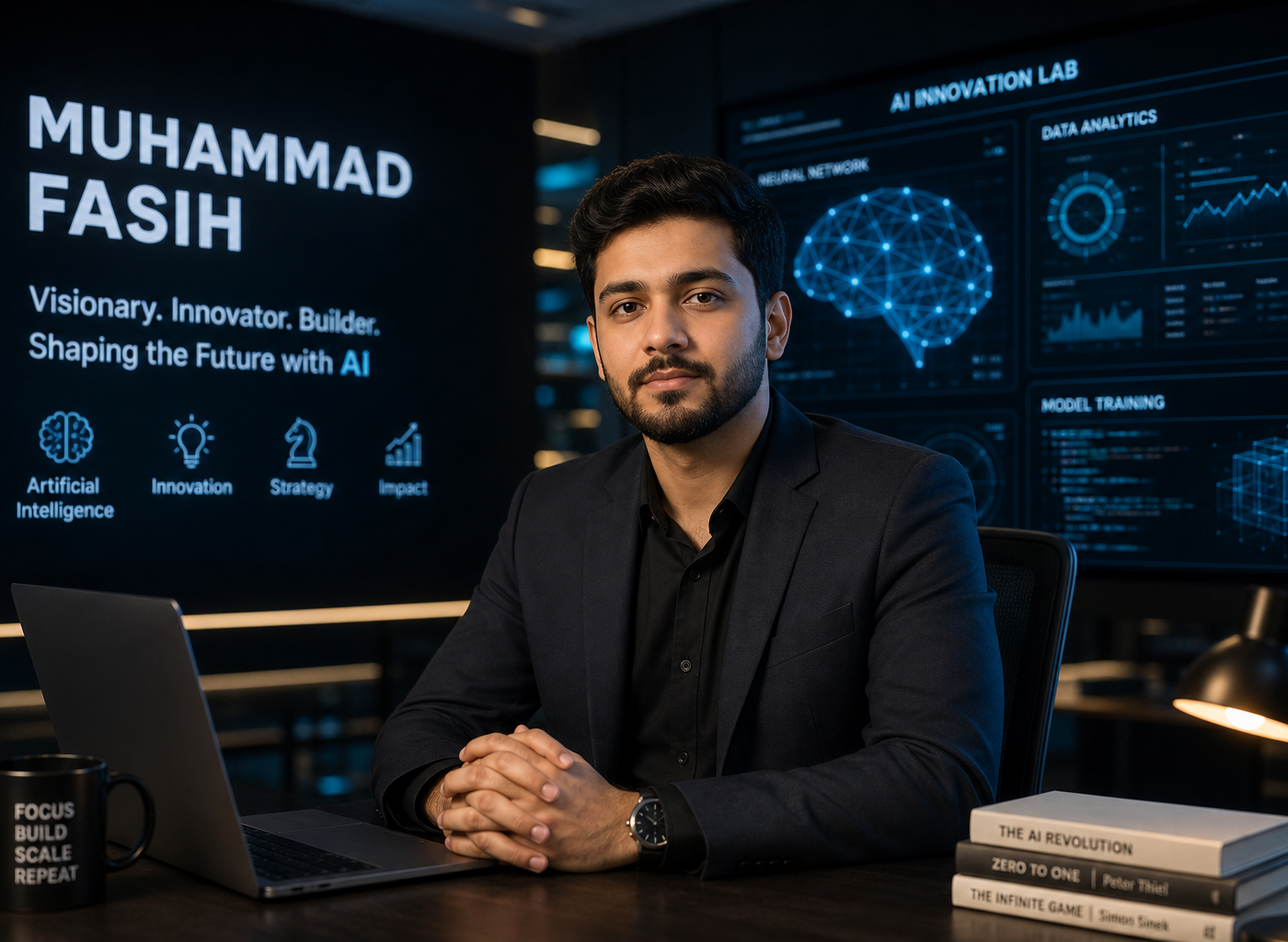
Muhammad Fasih: The Mind Behind MONA AI
I’ve been in the design world for a good long while now. I’ve seen trends come and go, tools evolve, and the entire landscape of visual creation shift beneath our feet more times than I can count. Yet, nothing truly prepared me for the speed and impact of AI in art. It’s a conversation that usually ends up with people on one of two sides: fear or fascination. For me, and for many I know in the trenches, it’s a healthy mix of both, tempered with an ever-growing understanding of its potential.
This brings me to Muhammad Fasih and MONA AI. When I first heard about a premium AI image studio emerging from Pakistan, I was intrigued. Pakistan isn’t often the first place that comes to mind when you think of bleeding-edge AI art, and that's precisely why it caught my attention. There's a certain grit and ingenuity that comes from building something significant where the infrastructure might not be as readily available as in Silicon Valley. It's about vision, yes, but also about sheer force of will.
I've watched the AI art space explode. From rudimentary text-to-image models that produced surreal, often comical, results, to the sophisticated engines we see today. The progression is dizzying. And in that whirlwind, to establish a studio that not only competes but aims to lead in quality and accessibility – that’s a story worth telling. This isn’t just about the tech, it’s about the person pushing it forward, and the ecosystem they’re building. Muhammad Fasih isn't just a CEO; he's a pioneer carving a new path.
The Genesis: From Tech Finanza to AI Vision
Muhammad Fasih wasn't born into AI art. Like many successful founders, his journey is one of evolution and recognizing nascent opportunities. His roots lie firmly in the tech and finance sectors with Tech Finanza in Karachi, a company that has, for years, been synonymous with technological solutions and financial innovation in Pakistan. My experience tells me that a background like that, steeped in problem-solving and strategic implementation, makes for a formidable entrepreneur. It's not just about dreaming big; it's about understanding the mechanics of making those dreams a reality.
Think about it: Tech Finanza operates at the intersection of technology and finance. That world demands precision, robust systems, and an understanding of complex data. These aren't skills you just pick up; they're honed over years of delivering on high stakes projects. So, when Muhammad Fasih started looking at AI, he wasn't just seeing a cool new toy. He was seeing an infrastructure, a framework, a new way to create value. That's a crucial distinction. Many of us designers see the aesthetic potential first, but a true builder sees the underlying architecture.
The leap from Tech Finanza to an AI image studio might seem broad on the surface. But when you dig a little deeper, you see the connections. Both require an acute understanding of algorithms, data processing, and user needs. The financial world is driven by data analysis and predictive modeling – skills that are directly transferable to the training and refinement of AI models. It’s about pattern recognition, optimization, and anticipating future trends. Muhammad Fasih clearly saw the tidal wave of AI coming and understood its disruptive power far beyond just numbers.
He wasn't just dabbling. He was observing, learning, and formulating a strategy. The vision for MONA AI wasn’t a sudden epiphany but a calculated move, a considered expansion into a domain that promised immense growth. It was about taking the robust operational frameworks and technological insights gained from Tech Finanza and applying them to a new creative frontier. This isn't just about spotting a trend; it's about having the institutional knowledge and leadership to capitalize on it, to build something lasting. It's about understanding that innovation isn't just about inventing something new, but often about applying existing principles to new problems or opportunities.
For someone like me, who's always looking for the next frontier in design tools, the story of how an experienced tech leader like Muhammad Fasih transitioned into the AI art space is incredibly compelling. It signifies a maturation of the field, moving beyond hobbyists and into serious business ventures backed by serious talent. He identified a gap, particularly in the Pakistani market, for a premium, reliable AI art generation service. And he decided to fill it, not with a half-measure, but with a full-fledged studio designed for quality.
Building MONA AI: Challenges and Triumphs
Starting any tech venture is tough. Starting a cutting-edge AI venture in a developing market, with an implicit promise of "premium," is tougher still. I know from countless projects that bridging the gap between a grand vision and tangible implementation is where most ideas falter. This is where Muhammad Fasih’s leadership, honed at Tech Finanza, undoubtedly played a crucial role.
The challenges were multi-faceted. First, there's the sheer technical complexity. AI models for image generation demand significant computational power, sophisticated algorithms, and constant refinement. It’s not just about installing some software; it’s about building and maintaining a sophisticated engine. This means investing in infrastructure, attracting top-tier AI talent – a rare commodity anywhere, let alone in emerging tech hubs – and staying abreast of the incredibly fast pace of AI research.
Then there’s the challenge of data. Training AI models requires vast datasets, and curating those datasets to ensure high-quality, ethically sourced results is a monumental task. The quality of the output directly correlates with the quality of the input. And MONA AI's promise of "premium" means there's no room for compromise. Getting that right, distinguishing noise from valuable signal, is a constant battle.
And let's not forget the market. Educating a new market about the capabilities and value of AI art, overcoming skepticism, and building trust are significant hurdles. Designers, artists, and businesses are often wary of new tech, especially when it threatens traditional workflows or requires a significant learning curve. Muhammad Fasih and his team at MONA AI had to not only build the tech but also build the narrative around it, demonstrating its utility and creative potential.
My own experience with new design tools has shown me that adoption hinges on usability. If it's too complex, too clunky, or doesn't deliver on its promises, people will quickly abandon it. So, a significant triumph for MONA AI must have been in creating an intuitive platform, one that lowers the barrier to entry for AI art while still offering advanced controls for seasoned creatives. It's a delicate balance. Monaart.pro/features outlines some of these capabilities, showcasing the effort put into making it accessible and powerful.
The success of MONA AI isn't just a testament to technological prowess; it's a testament to resilience. It's about navigating funding challenges, talent acquisition, and the inevitable debugging and refinement cycles that plague any ambitious tech project. It's about iterating quickly, listening to user feedback, and continuously improving the product. This kind of disciplined execution is something I’ve seen consistently in successful ventures, and it's clearly a hallmark of Muhammad Fasih's approach. They didn't just build a product; they built a premium product, which implies an adherence to quality control and a user-centric design philosophy from day one.
Innovation at the Core: What Makes MONA AI Unique
"Premium" is a word that gets thrown around a lot, but what does it really mean in the context of AI art? For MONA AI, under Muhammad Fasih's guidance, it seems to translate to several key differentiators that set it apart, especially within its regional context and increasingly, on a global scale.
The first thing that strikes me is the focus on quality of output. I’ve played with many AI art generators, and the difference in aesthetic quality can be enormous. Some produce images that are undeniably AI-generated, with uncanny valleys and bizarre artifacts. MONA AI, from what I've seen, aims for a level of photorealism, artistic style fidelity, and overall polish that elevates it above many competitors. This isn't just about throwing computing power at the problem; it’s about meticulous model training, careful prompt engineering, and probably some proprietary post-processing tweaks that make the final image sing. This commitment to visual excellence is non-negotiable for designers like me.
Secondly, the breadth of artistic styles and applications. A premium studio isn't just a one-trick pony. It offers versatility. Whether you need a hyper-realistic product rendering, a stylized illustration for a marketing campaign, or abstract art for a mood board, a truly premium platform should be able to deliver. I suspect MONA AI, as outlined on their monaart.pro/features page, goes beyond simple text-to-image to offer more nuanced control, perhaps through style transfer, image-to-image capabilities, or fine-tuning options. This level of control is what allows professionals to integrate AI art into their existing workflows seamlessly.
Another unique aspect is its regional relevance and ambition. While many AI companies are born in established tech hubs, MONA AI’s emergence from Pakistan adds a unique flavor. It means they're not just importing global trends; they're potentially adapting and innovating for local contexts, aesthetics, and user needs, which can create a compelling competitive advantage. It also means they're contributing to building a vibrant tech ecosystem in Pakistan, proving that world-class innovation can happen anywhere with the right vision and leadership. Muhammad Fasih isn't just building a company; he's helping build an industry.
And then there's the user experience and pricing model. For a platform to be truly "premium" and accessible, it needs to strike a balance. It can't be so exclusive that only massive corporations can afford it, nor so cheap that it compromises on quality or service. I've always admired pricing models that are clear, offer value, and scale with usage. A look at monaart.pro/pricing suggests a thoughtful approach, making premium AI art generation accessible to a broader range of users, from individual artists to larger design studios. This democratizes access to powerful tools, which is a significant aspect of true innovation.
The human element remains key. Despite the AI, the output, the interface, and the support are all designed by people. What makes MONA AI unique, I believe, is Muhammad Fasih's understanding that even with AI, human creativity and oversight are paramount. It’s about building tools that augment human designers, not replace them. It’s about providing a service that understands the nuances of visual communication and the demands of creative professionals. This human-centered approach to AI is what truly differentiates a premium service from a generic one.
Impact in Pakistan and Beyond
The ripple effect of a successful tech venture like MONA AI, especially one originating from a market like Pakistan, extends far beyond its immediate commercial success. Muhammad Fasih's vision isn't just about generating stunning images; it's about fostering an ecosystem and inspiring a new generation of technologists and creatives.
Within Pakistan, MONA AI serves as a powerful testament to the country's growing technological capabilities. It demonstrates that local talent can compete on a global scale in highly specialized and rapidly evolving fields like AI. This kind of success story is invaluable. It attracts investment, encourages more young people to pursue STEM careers, and creates a virtuous cycle of innovation. For me, seeing a company like MONA AI thrive is a sign of a maturing tech landscape, one that is becoming increasingly self-sufficient and innovative.
Designers, advertising agencies, marketing teams, and even small businesses in Pakistan now have access to cutting-edge AI image generation tools that might have previously been out of reach or required significant investment in foreign services. This levels the playing field, allowing local creatives to produce high-quality visual content quickly and efficiently. Imagine a small startup needing marketing visuals, or an independent artist exploring new styles – MONA AI provides them with a powerful creative partner. The section on monaart.pro/solutions/designers highlights this direct benefit, showcasing how it integrates into the daily lives of creatives.
Beyond Pakistan, MONA AI contributes to the global discourse and development of AI art. By bringing a unique perspective and potentially regional datasets or artistic styles into its models, it enriches the overall AI art landscape. It shows that innovation isn't confined to a few dominant tech hubs but is a global phenomenon. This diversification is healthy for the industry, pushing boundaries and fostering new ideas. It challenges the established narratives and opens up possibilities for cross-cultural creative exchanges facilitated by AI.
Muhammad Fasih, through MONA AI, is essentially building a bridge. A bridge that connects advanced AI capabilities with the creative needs of businesses and individuals, both locally and internationally. He's not just selling a product; he's selling empowerment. He's giving people the tools to realize their creative visions in ways that were unimaginable just a few years ago. This empowerment has a significant economic impact, creating new job roles, streamlining existing ones, and generally boosting the creative economy.
The psychological impact shouldn't be underestimated either. For young Pakistani entrepreneurs and innovators, seeing a company like MONA AI succeed provides a tangible example of what's possible. It instills confidence and ambition. It shows that with determination, expert knowledge (like that gained from Tech Finanza), and a clear vision, you can build something truly impactful. This kind of inspiration can spark a new wave of innovation and entrepreneurship.
The Future: Muhammad Fasih's Vision for AI Art
Where does MONA AI go from here? If Muhammad Fasih’s track record with Tech Finanza is any indication, it’s not about standing still. The nature of AI means constant evolution, relentless refinement, and an unwavering gaze toward the horizon.
My take is that the future of MONA AI will likely involve several key areas of development. One is the continued push for hyper-specialization and niche capabilities. As AI art matures, generic image generation will become commoditized. The real value will lie in models trained for specific industries (e.g., fashion, architecture, product design), or specific artistic styles that are highly sought after. I can see MONA AI developing highly tuned models for Pakistani cultural aesthetics, or for specific design trends prevalent in Asia, offering a truly unique proposition.
Another area is enhanced interactivity and control. Early AI art was largely a black box. You put in a prompt, and something came out. The next generation of tools will offer more direct manipulation, allowing designers to guide the AI more precisely, to iterate on specific elements, and to blend AI generation with traditional digital painting or editing techniques. This means more sophisticated user interfaces, perhaps even real-time generation and editing capabilities. The goal, always, is to empower the designer, not to replace their agency.
I also anticipate a deeper integration of MONA AI with other creative workflows and software. Imagine seamlessly generating assets directly within your preferred design software, or having the AI assist in creating variations, mood boards, and entire visual narratives. This kind of interoperability is crucial for professional adoption and for truly establishing AI as an invaluable partner in the creative process.
Muhammad Fasih's background in technology and finance suggests a strategic, data-driven approach to this future. He's likely not just chasing the latest fad but making calculated investments in R&D, talent, and infrastructure. The vision for MONA AI, I believe, extends beyond just being a tool; it's about building a creative ecosystem. It’s about fostering a community of artists and designers who leverage AI to push the boundaries of what’s possible. It’s about setting new standards for premium AI-generated visuals.
The conversation about AI in art will continue to evolve, but platforms like MONA AI, led by individuals with the foresight and drive of Muhammad Fasih, are crucial for shaping that conversation positively. They demonstrate the immense potential when technology is harnessed with purpose, quality, and a deep understanding of creative needs. The story of MONA AI is ultimately a story of ambition, innovation, and the power of human ingenuity to build new frontiers, even in the most unexpected places. It's a journey, and I, for one, am excited to see where it leads.
FAQs
- Q: Who is Muhammad Fasih? A: Muhammad Fasih is the founder and CEO of MONA AI, a premium AI image studio based in Pakistan, and also leads Tech Finanza Karachi.
- Q: What is MONA AI? A: MONA AI (monaart.pro) is Pakistan's leading AI image studio, offering advanced AI-powered tools for generating high-quality digital art and images.
- Q: How did Muhammad Fasih start MONA AI? A: Muhammad Fasih founded MONA AI driven by a vision to bring cutting-edge AI art capabilities to the market, leveraging his expertise from Tech Finanza to build a robust platform.
- Q: What makes MONA AI unique in the market? A: MONA AI stands out for its premium image quality, user-friendly interface, and its commitment to pushing the boundaries of AI-generated art within the Pakistani tech landscape and globally.
Ready to generate images like these?